
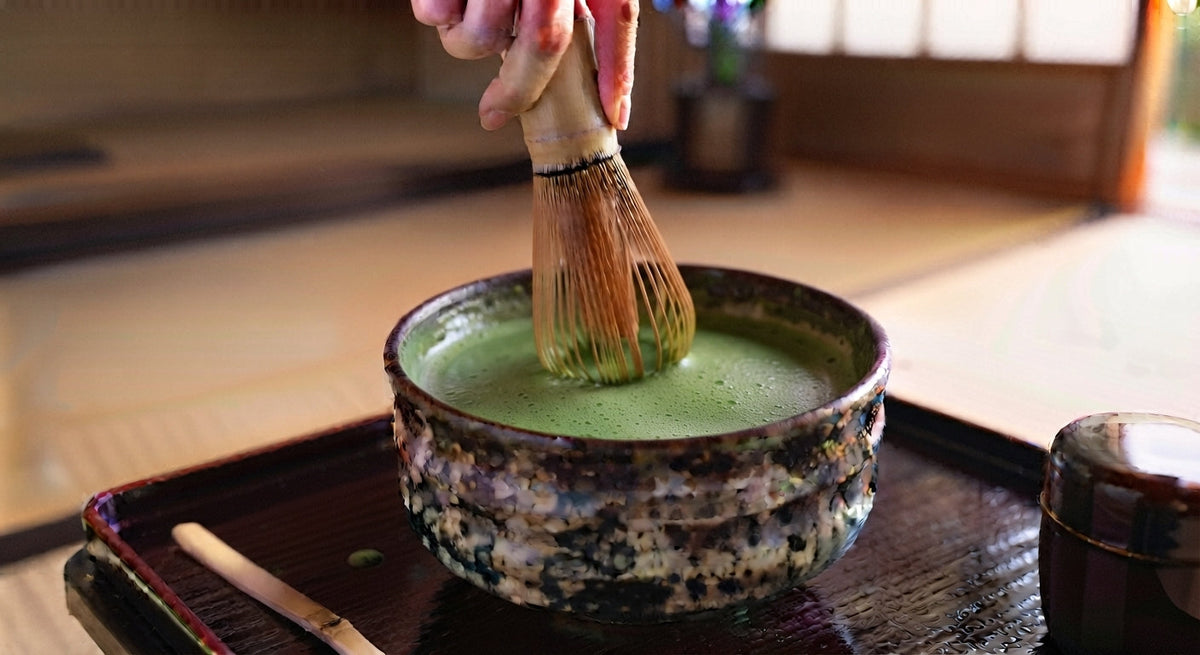
How to prepare matcha: dosage, water temperature and instructions
A good cup of matcha needs only a few ingredients and the right technique. Learn how to prepare matcha with a Chasen, how much water to use and how to make it without a bamboo whisk.
How much water does matcha need?
The ratio of matcha powder to water influences how intense your matcha tastes. A ratio of about 1:10 to 1:30 can serve as a starting point.
| Powder-to-water ratio | Water for 2 g of matcha | Result |
|---|---|---|
| 1:10 | 20 g (approximately 20 ml) | Very concentrated and thick |
| 1:20 | 40 g (approximately 40 ml) | Strong and intense |
| 1:30 | 60 g (approximately 60 ml) | Lighter and less concentrated |
Note 1 – water quantity: Less water makes a more concentrated matcha; more water makes a lighter one. The right quantity depends on your taste.
Note 2 – temperature: Very hot water can bring out astringent and bitter notes. 60–70 °C is a good starting point if you prefer a milder flavour.
Traditional matcha preparation: step by step
For traditional preparation, you need matcha, water, a bowl and a bamboo whisk called a Chasen.
1. Put matcha in the bowl
Put about 2 g of matcha into a bowl.
Sifting can help prevent lumps, but is not essential for every preparation. If your powder is already fine and loose, you can continue without it.
2. Add water
Use water at 60–70 °C. First add a small amount to the powder and stir into a smooth mixture. Then add the remaining water. Adjust the total quantity to your preferred strength.
3. Whisk the matcha quickly
Hold the bowl with one hand and the Chasen with the other. Move the whisk through the liquid in quick, light W- or M-shaped movements from the wrist.
Whisk briskly rather than stirring slowly in circles. This distributes the powder evenly and encourages foam.
4. Refine the foam
Once foam has formed, slow down and gently move the whisk tips just along the surface. This reduces larger bubbles and makes the foam finer and more even.
A smooth surface with fine bubbles is a pleasing result, but does not have to be perfect every time.
Note: Do not press the Chasen hard against the base of the bowl. The fine bamboo tips should move freely.
5. Enjoy fresh
Your matcha is ready when the powder is evenly distributed and the desired texture is reached. Enjoy it fresh, as the fine particles can settle over time.
Why is matcha whisked?
Matcha does not dissolve completely in water. Whisking distributes the powder evenly, reducing lumps and creating a more pleasant texture.
The movement also introduces air into the liquid, creating foam. Its fineness depends mainly on technique and the mixing ratio.
Prepare matcha without a Chasen: the Express method
Matcha is easy to prepare without a bamboo whisk too. An electric milk frother or a shaker can be a practical everyday alternative.
Prepare matcha with an electric milk frother
-
Put the matcha powder into a sufficiently tall container.
-
Add water at 60–70 °C.
-
Use the milk frother until the powder is distributed as evenly as possible in the water.
Prepare matcha with the Zenma Mini Shaker
With the Zenma Mini Shaker you can mix matcha directly with water, without a bamboo whisk or electric frother.
- First add a little cold or room-temperature water to the shaker.
- Add about 2–3 g of matcha powder.
- Add more water up to the upper edge of the lettering on the logo, approximately 70–80 ml of water.
- Close the shaker according to the manufacturer's instructions and shake well until the powder is evenly distributed.
- Open the shaker carefully and enjoy your matcha.
Note: Make sure the container is suitable for the liquid and its temperature. Never close a container holding boiling-hot water, as pressure can build up.
Our article explores which utensils are useful and which alternatives are available: 'Which accessories do you really need?'.
A frother and a shaker both distribute the powder in water, but do not necessarily create the same fine foam as traditional Chasen whisking.
Common matcha preparation problems
My matcha has lumps
Sift the powder if needed, or first mix it with a little water before adding the rest.
My matcha tastes too bitter
Try a slightly lower water temperature or adjust the powder quantity. The variety's characteristics also affect flavour.
The matcha settles at the bottom
This is normal because the powder does not dissolve completely. Gently swirl the bowl to redistribute it if needed.
The foam has large bubbles
Whisk quickly at first, then slow down. Gently move the Chasen tips over the surface to reduce larger bubbles.
The essentials of preparing matcha
Water quantity, temperature and whisking technique matter for traditional preparation. A Chasen gives you control over the foam. A shaker is a practical alternative when you want a quick, simple method.
For a cold milk-based drink, our iced matcha latte recipe provides separate instructions.